
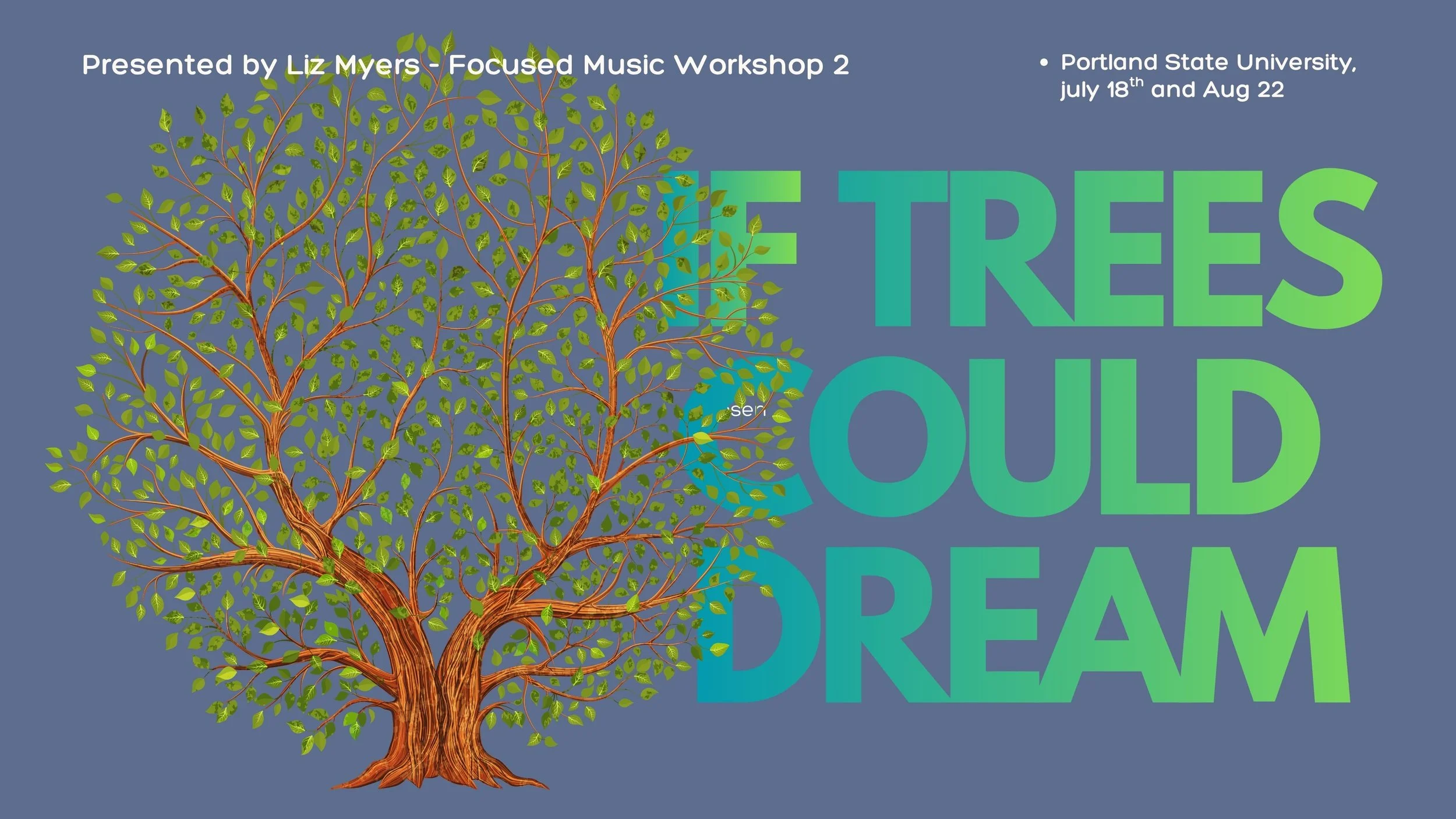
Focused Music Workshop 2 - Recording Session in Portland, OR
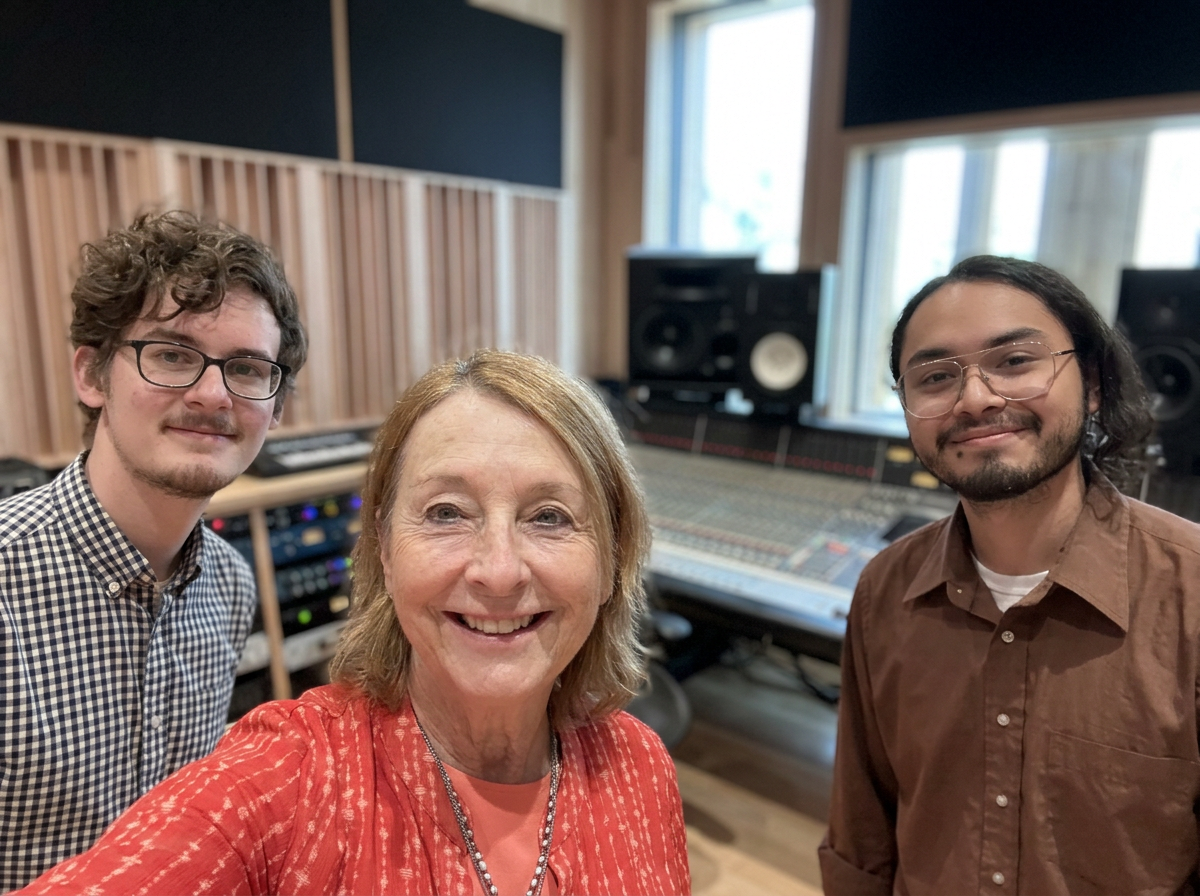
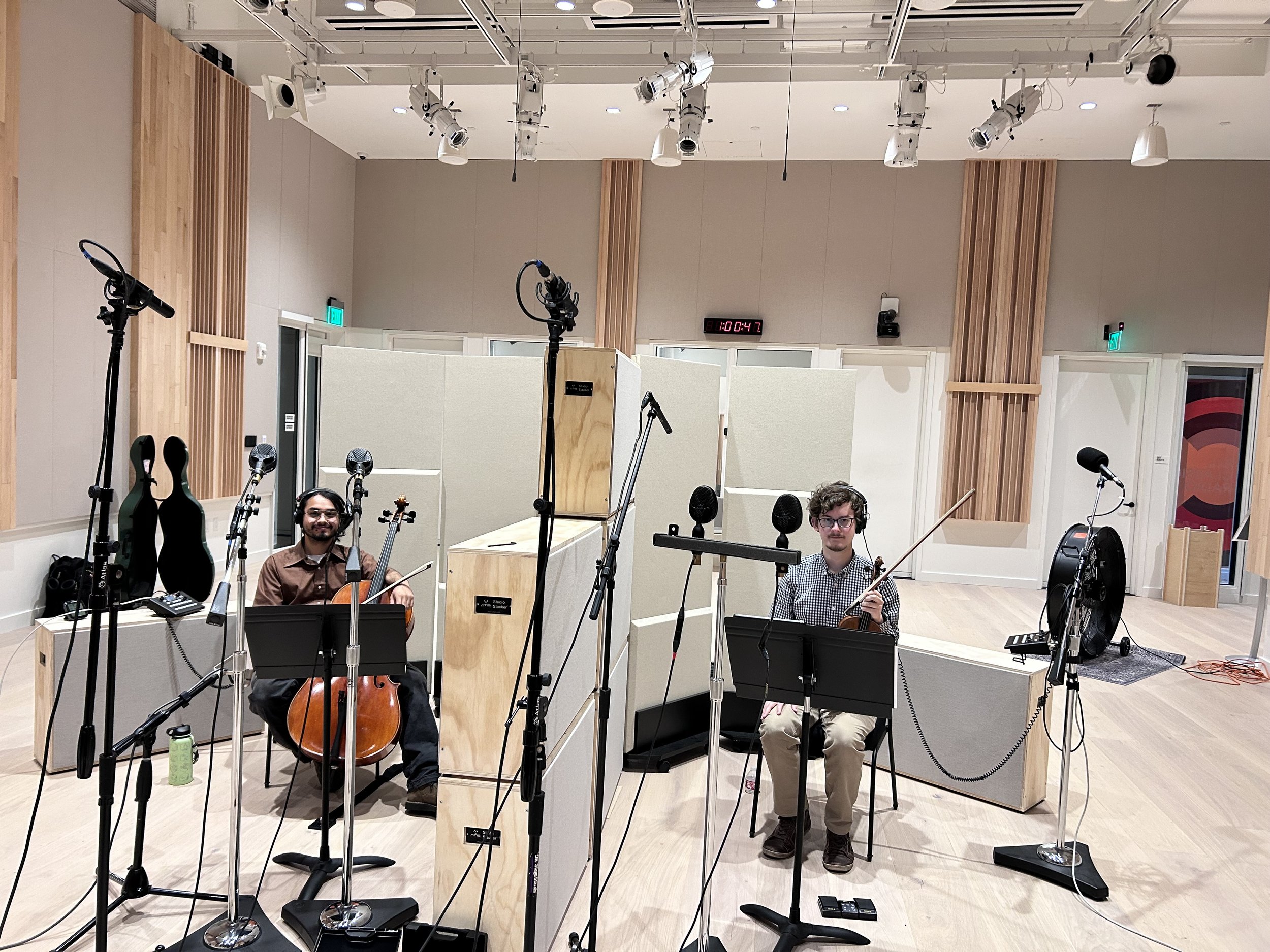
Performers on the Focused Musick Workshop 2 sessions at All Classical recording studios. Charles Dalrymple (violin), Liz Myers (piano) and Julian Casas (cello.)
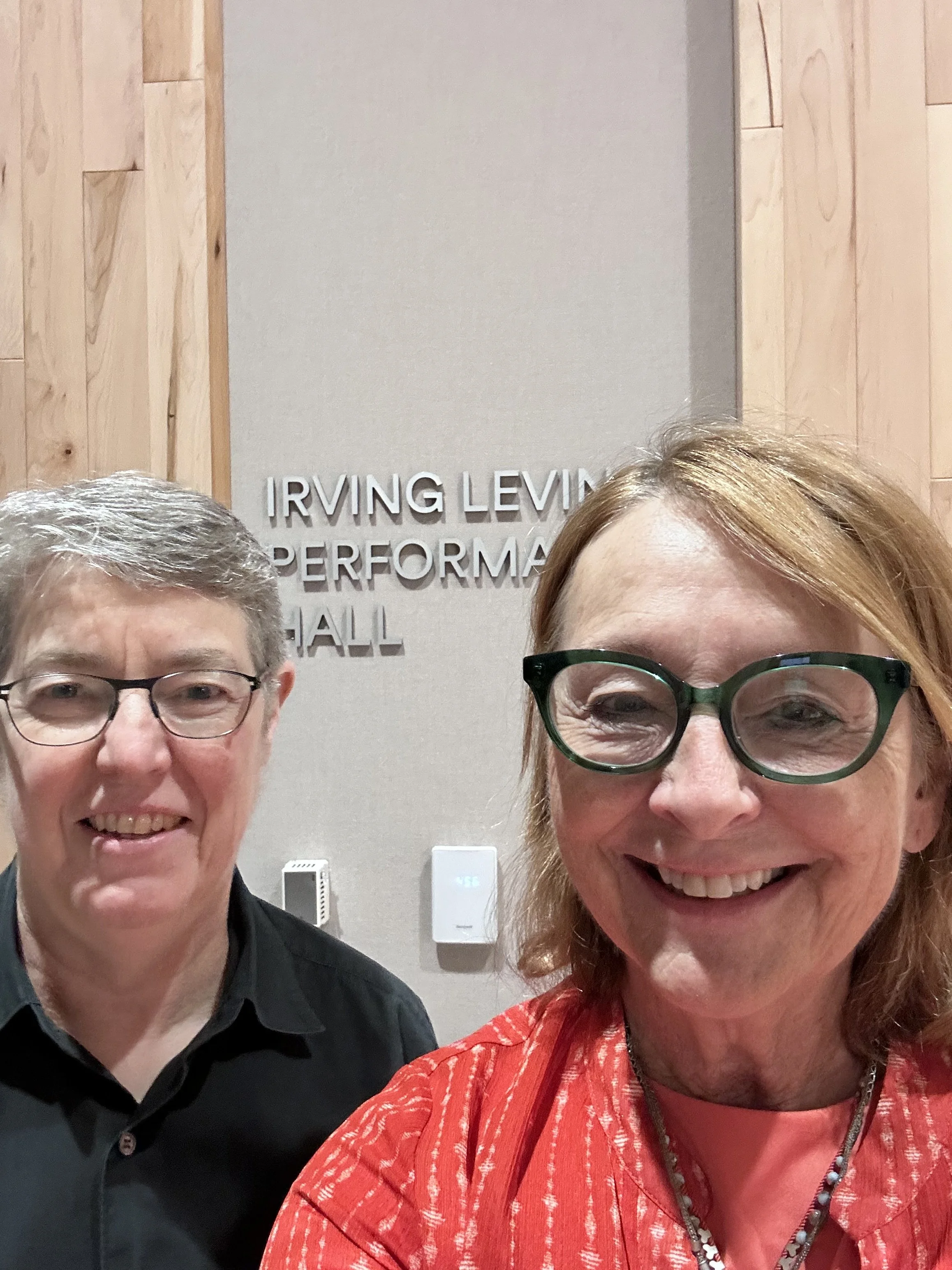
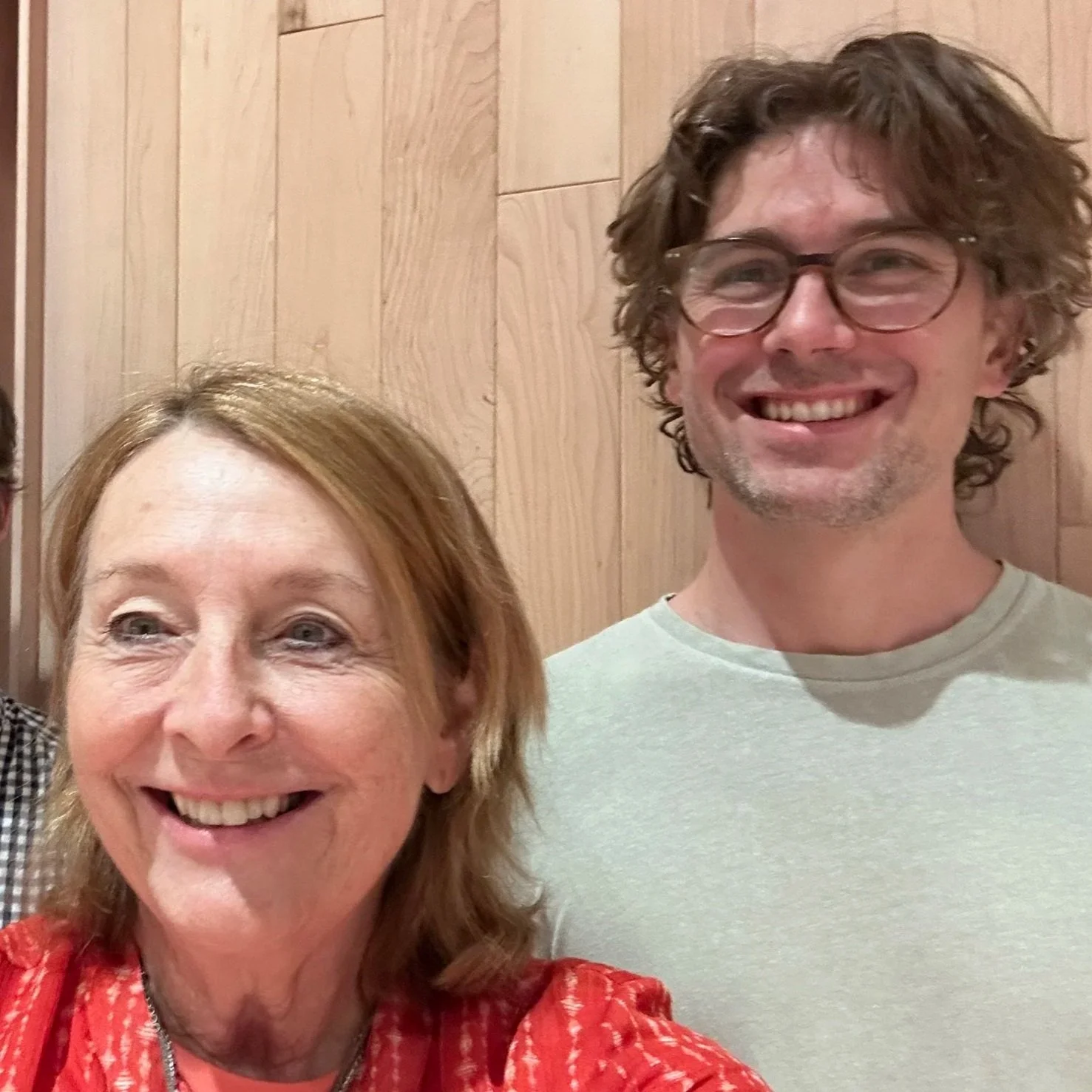
Day 2, Aug 22, 2026 - the recording session. On this day we recorded for three hours in the All Classica’s beautiful Irving Levin Performance Hall and James DePriest Recording Studio. 18 minutes of Piano Trio music compositions by the students. Thanks to Branic Howard of Open Field Audio and Laura Hassell for the warm studio vibe, and especially our cellist and violinist, Julian Casas and Charles Dalrymple. Bravo tutti!!
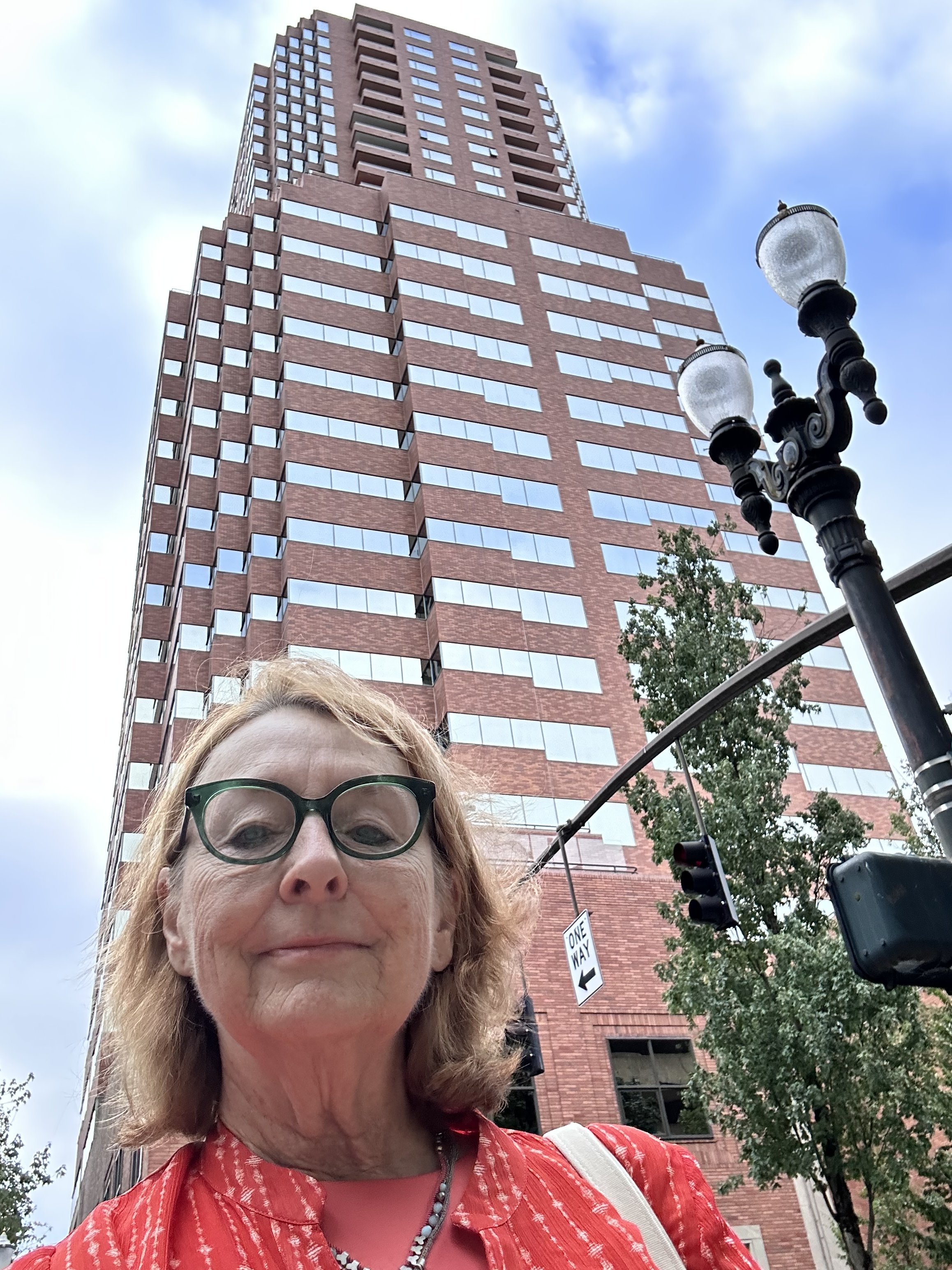
Day 1: Lecture and Presentations at Portland State University
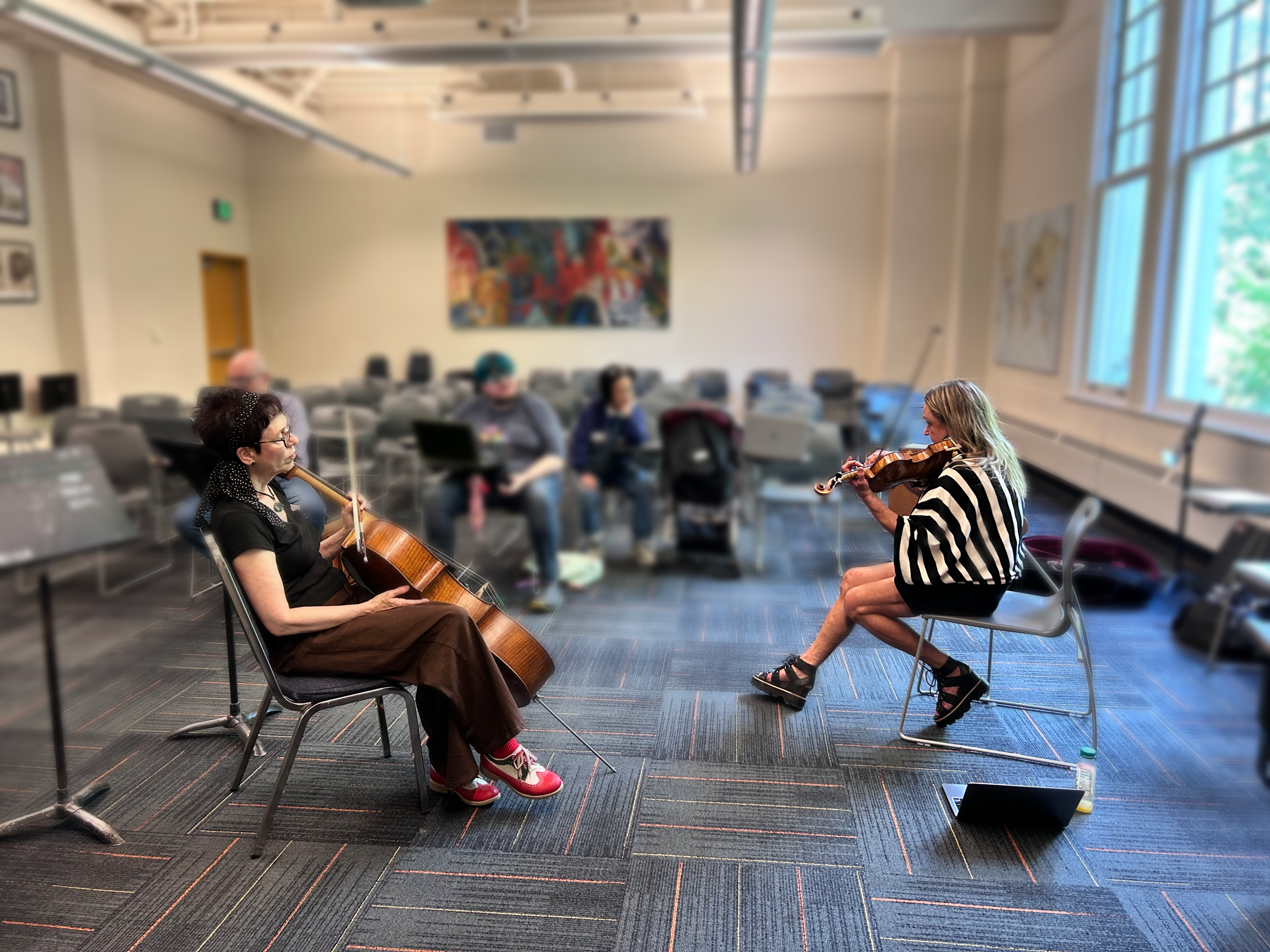
Diane Chaplin (cello) and Juliana Trivers (violin) demonstrate their instruments.
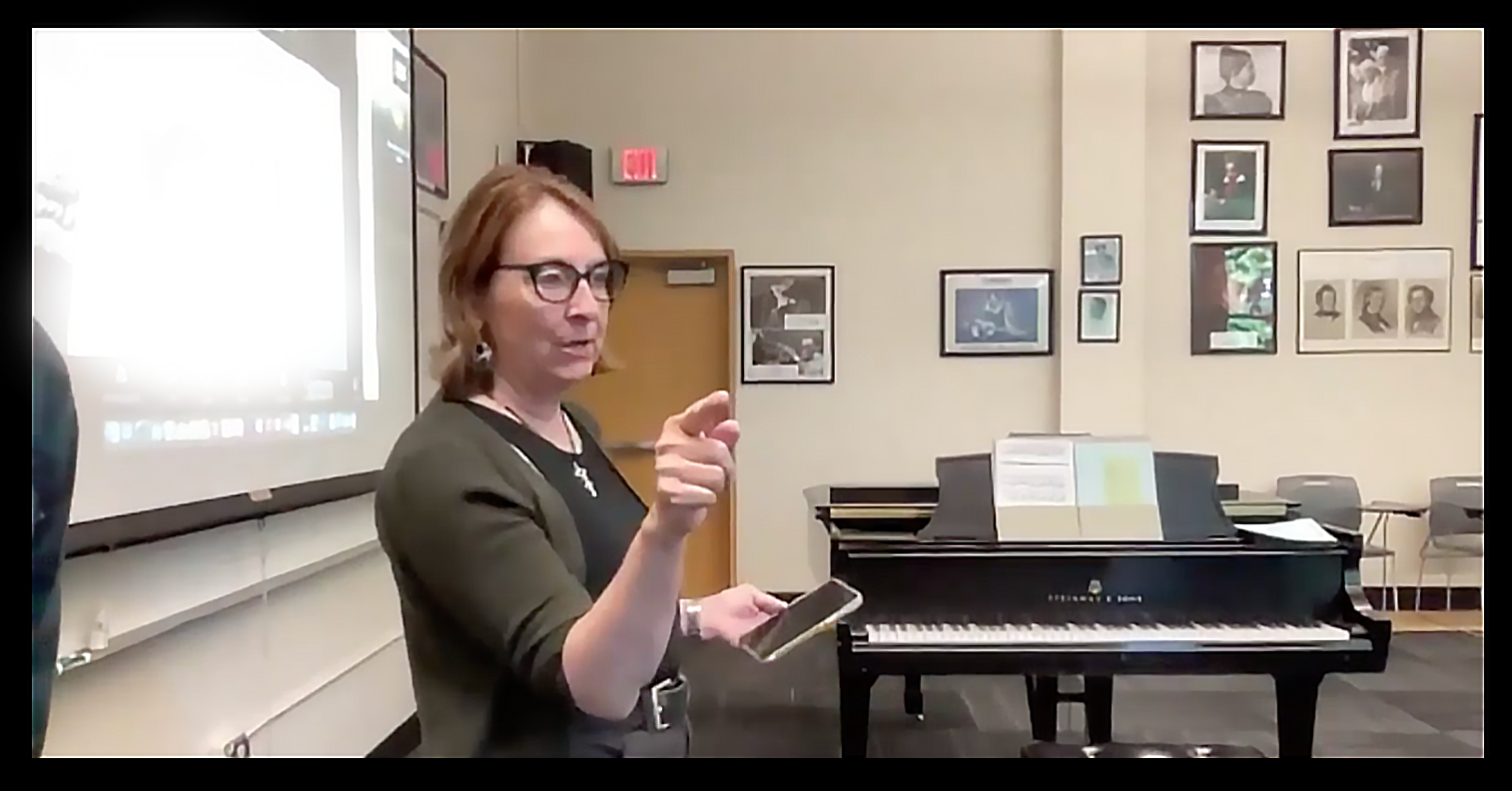
Day 1 July 18, 2026 in Portland, Oregon at Portland State University. Myers speaks to composers and gives presentation on writing for the Piano Trio (piano, violin & cello) with Chaplin & Trivers.
UCLA Extension Classes - Liz Myers - Classes complete!
For the past 18 years, Myers has been teaching at UCLA Extension a course entitled “Put Your Music to Work: Composition for Commercials.” In this popular course, Myers give students real work samples of commercials to re-score and then their work is evaluated. In addition she provides numerous topics of compositional skills and the study of other composers’ works and process: e.g. Hans Zimmer, Alexandre Desplat, Thomas Newman along with classical stalwarts such as Leonard Bernstein, Aaron Copland, Elgar and Stravinsky. Music business revenue for music composers is also discussed with advice and information given on Musicians Federation of Musicians, music licensing, performing royalty organizations, music publishing as well as numerous music engineering tips. In all, this course is considered a great tune up for working composers as well as an expansive introuduction to the rigors and requirements of music used for advertising campaigns and branded entertainment.
Guest speakers enhance the value of the course for the students, and Myers is extremely grateful for their contributions. “There is probably no other educational resource for commercial music in the US that has such a wide range of information and challenging assignments for those music students who are curious about how music can work in conjunction with a powerful visual and a compelling story to inspire consumers to use a product that will hopefully improve their lives,” says Myers. “We score the Big Beats of someone’s life, as it is the human emotion of the very short film that we romance with the successful underscore.”
Q&A:
How do we as composers get started? What is our inspiration? What is our assignment? Read on to discover the full script from Day 1 of Focused Music Workshop 2 at Portland State University, July 18, 2026.
How do we get started? Part of the problem of being a Composer that you have to find the pebble it’s in your pocket so when you go down to the lake, you can take the pebble out and you throw it you hope you get a good throw that first time and then you want to see “boop, boop, boop.” (Imitating skimming a pebble on a lake) Right? If you’ve ever thrown a pebble into a lake, you want to see how it develops. That is in some ways what we’re doing. So I’m looking for the pebble —the prompt. And that was the idea of trees that I had. Why are we writing for the Piano Trio? So let’s see I have another three minutes which I will jump through the piano business, but I just wanted to show you some study scores. I think that T.J. may have one of my favorite piano trios. Ah, how does the piano trio come into all this? It’s a bit of a long story, but Bonnie Miksh is hosting a module in October with a Piano Trio ensemble that is coming to play the works of her students. So she said you can use this as a starter (course.) So the ideas that are happening here (for those who are Bonnie’s students) you can come back to or develop them. You’re just going to learn a bit more about the capacity of violins, cellos and piano. I am in charge of (explaining) what the Piano can do. I just wanted to mention one thing that I have learned from writing. (As you may know) I have a cello duo with my partner in LA Paula Hochhalter, who is a session player. A session player is someone who comes in (to the recording studios) and plays film scores by sight. These are people that are extraordinary sight readers. They’re able to turn a John Williams score into something magnificent - the first time. They do world premieres of film scores. Paula is an extraordinary musician, but she’s also a Brahms “freak”, so we started taking Brahms piano works and adding cello to them. I have been studying in depth how it works well and the thing that I’ve discovered is that there is such a difference in attack. The piano as you know is basically a big fat heavy percussion instrument. If you look at the mechanics of it…(she plays A 440 and gives an explanation of how the physics of the piano’s hammers and sustain damper work.) Analysis of Antonin Dvorak’s Piano Trio in f minor. Let’s take a close look at Antonin Dvorak’s Piano Trio in f minor. (Share the first page of the score.) Note to composers: If the Composer writes a word on their score, it becomes sacred. So don’t fool around with something that you don’t care about at the beginning of your composition. Antonin Dvořák wrote Allegro Ma non troppo. How’s my Italian? And this is a great thing because for pianists, this means fast, but not faster than you feel comfortable doing it. Don’t sweat it! And if you look at what’s going on here… (You can see that we pianists play 1000 notes to every string player's single note. And no one cares.And if you look (closely) at what’s going on here, everything is in its place. Allegro Ma non troppo – – OK everyone relaxes. Key signature? Oh you’re thinking it could be A flat (major) or it could be F minor. The violin is in treble clef. The reason we have clefs is to avoid ledger lines. (Diane and Juliana will talk more about clefs later because it impacts the cello more than it does the violin.) The cello is not the open C – not the lowest C – but the octave above it. That’s a whole different world! The thing about today, (is that) if you come out of this class with nothing learned, I hope you will remember the three Ts: TONE, TIMBRE, and TEXTURE. Does your music have a tone to it in other words? Does it sound good? Timbre is an even deeper dive into tone and that it is the physics of the sound —the beating of the strings, etc. And the texture is (the mood and) what people take away from it.
So I guess there’s a fourth T which is TAKEAWAY.